Simplexity in Car Interfaces
Historical analysis of Renault dashboards against Tesla, Mercedes-Benz, Porsche, BYD and NIO, then an adaptive-interface prototype across screen, head-up display, voice, audio and haptics — validated with drivers.
Master's thesis on simplexity — the way a system stays understandable without being simplistic — with adaptive automotive interfaces as the field.
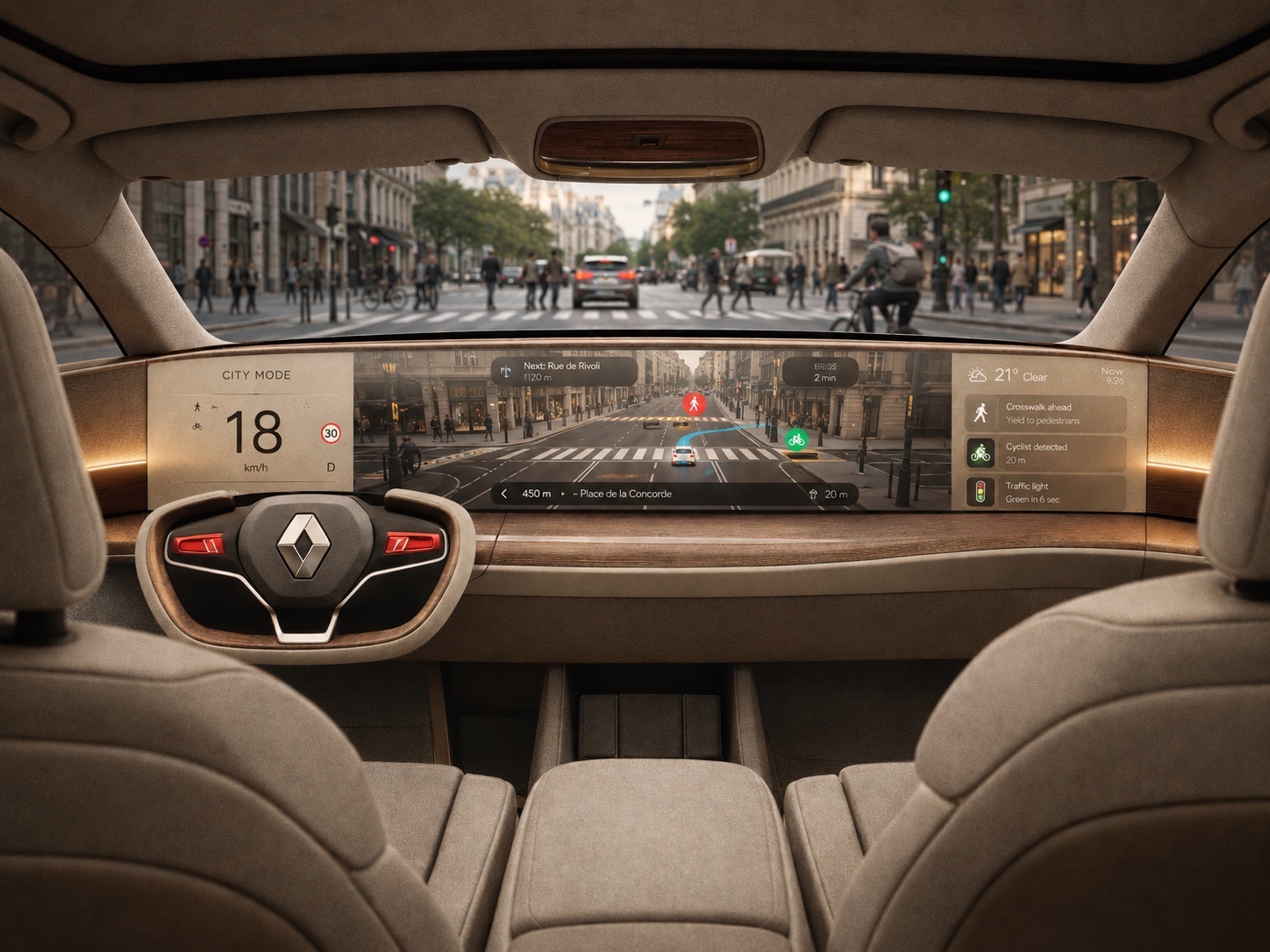
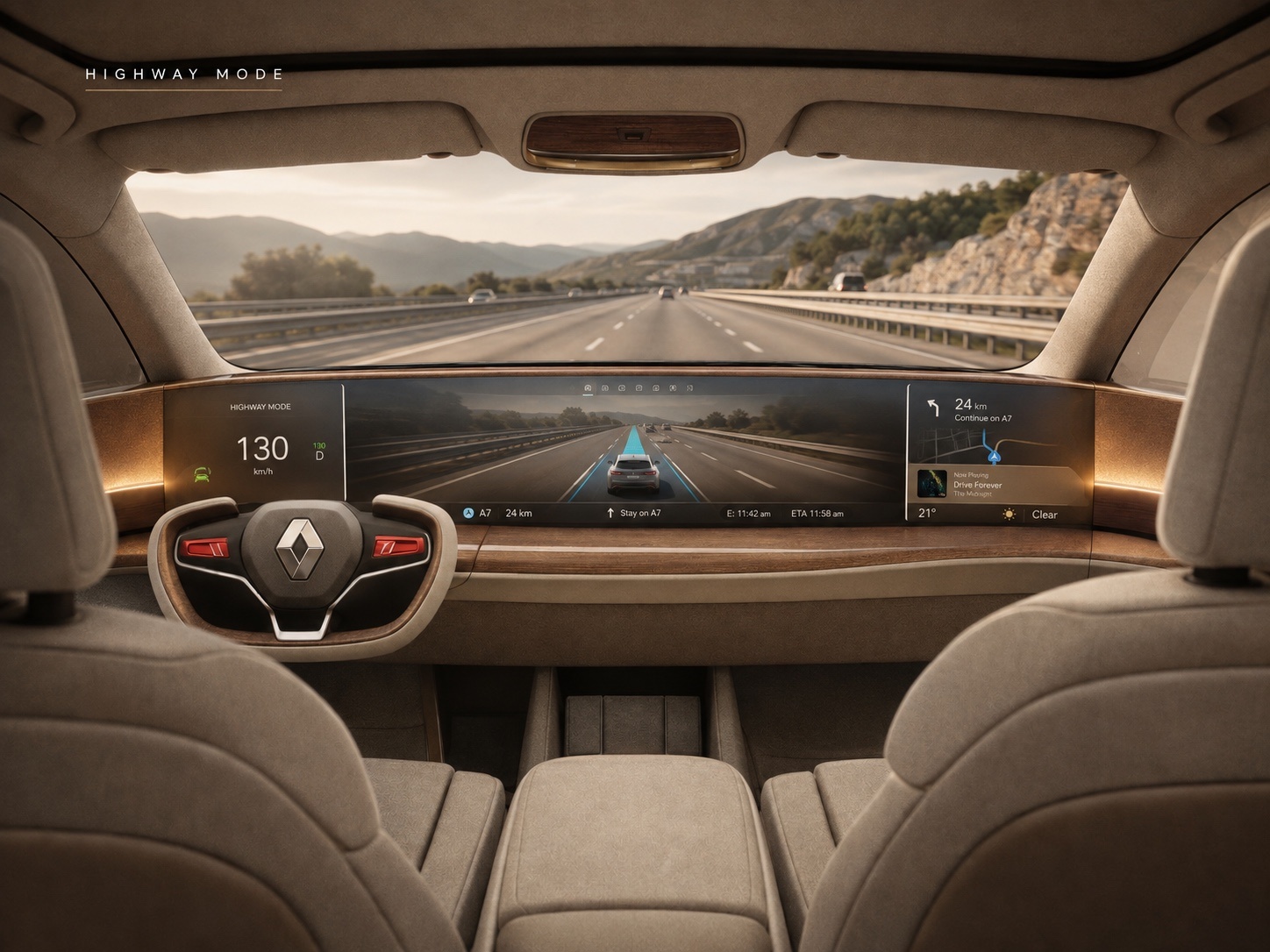
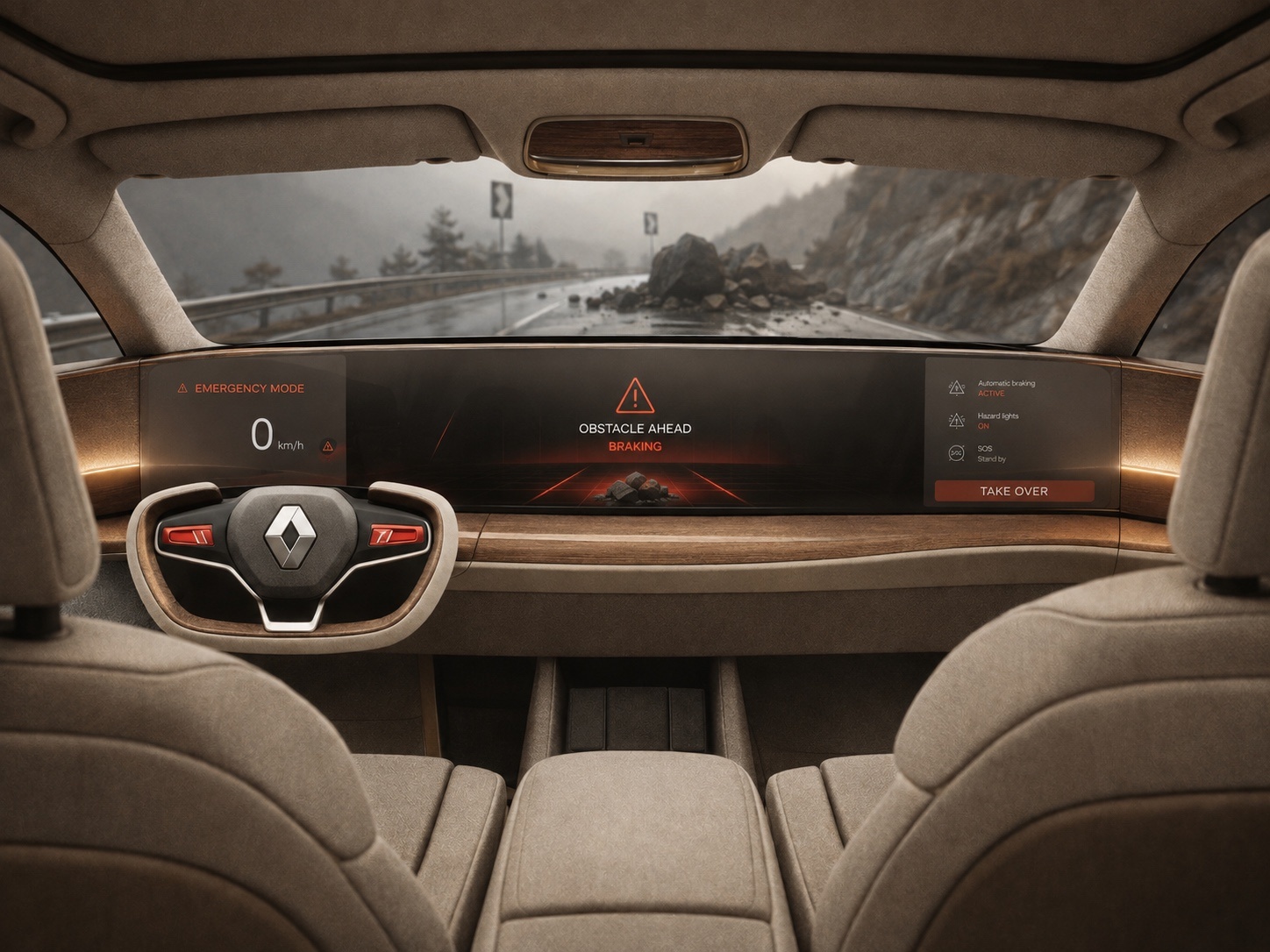
Method: a historical analysis of Renault dashboards from the 4CV to today, a comparative study against Tesla, Mercedes-Benz, Porsche, BYD and NIO, a driver questionnaire and three expert interviews, then personas, empathy maps, driver journeys, city / motorway / parking / emergency scenarios and storyboards.
The prototype coordinates a central screen, head-up display, physical controls, voice, audio alerts and haptics. Key findings: information has to be prioritised, all-touch has limits, contextual multimodality helps, and human control must be kept.
- Comparative analysis
- Usability testing
- Prototyping
- Multimodality
(Tech Stack)
Tools & technologies
 Figma
Tool selection to be confirmed.
Got a project in mind?